根据下列内容,回答216-220题。
Back in the old days, when I was a child, we sat around the family roundtable at dinnertimeand exchanged our daily experiences. It wasn't very organized, but everyone was recognized and all the news that had to be told was told by each family member.
We listened to each other and the interest was not put-on; it was real. Our family was a unitand we supported each other, and nurtured each other, and liked each other, and--we were evenwilling to admit--we loved each other.
Today, the family roundtable has moved to the local fast-food restaurant and talk is not easy,much less encouraged.
Grandma, who used to live upstairs, is now the voice on long distance, and the working
parent is far too beaten down each day to spend evening relaxation time listening to the sandboxexperience of an eager four-year-old.
So family conversation is as extinct as my old toys and parental questions such as "What haveyou been doing, Bobby? " have been replaced by "I'm busy, go watch television. "
And watch TV they do; count them by the millions.
But it's usually not children's television that children watch. Saturday morning, the children'shour, amounts to only about $ percent of their weekly viewing.
Where are they to be found? Watching adult television, of course, from the Match Game inthe morning, to the afternoon at General Hospital, from the muggings and battles on the eveningnews right through the family hour and past into Starsky and Hutch. That's where you find ourkids, over five million of them, at 10 p.m., not fewer than a million until after midnight! All ofthis is done with parental permission.
Television, used well, can provide enriching experiences for our young people, but we mustuse it with some sense. When the carpet is clean, we turn off the vacuum cleaner. When the dishesare clean, the dishwasher turns itself off.
Not so the television, which is on from the sun in the morning to the moon at night andbeyond !
Parents must exercise some control and show some concern about the cultural influence on thechild when a program not intended for that child is viewed. Parents need to intervene. Noninterventionmay be a wise policy in international affairs, but the results of parental nonintervention will not bewise at all.
From the first two paragraphs one may infer that the writer's attitude towards "the olddays" is___________.
- A.preferring
- B.hating
- C.being tired of
- D.disappointing
正确答案及解析
正确答案
解析
由本文前两段的内容和一些词和短语exchanged our daily experiences,a unit,support-ed,nuaured,liked,loved可知,在那些过往的日子里,作者一家人其乐融融,所以A选项可以表达出这层意思,为正确答案。
包含此试题的试卷
你可能感兴趣的试题
根据《中华人民共和国中国人民银行法》的规定,我国货币政策的最终目标是( ),并以此促进经济增长。
-
- A.保持货币币值稳定
- B.实现充分就业
- C.保持物价稳定
- D.保持利率稳定
- 查看答案
箱子里面有红、白两种玻璃球,红球数比白球数的3倍多两个,每次从箱子里取出7个白球、15个红球。如果经过若干次以后,箱子里只剩下3个白球、53个红球,那么,箱子里原有红球比白球多多少个?
-
- A.102
- B.104
- C.106
- D.108
- 查看答案
市场经济体制下,财政具有的职能有( )。
-
- A.资源配置职能
- B.收入分配职能
- C.经济稳定和发展职能
- D.综合平衡职能
- E.货币发行职能
- 查看答案
以下对政府部门的储蓄,表述正确的是( )。
-
- A.政府部门的储蓄可以是正值,也可以是负值
- B.政府部门的储蓄包括私人储蓄和企业储蓄
- C.政府部门的储蓄一定是正值
- D.政府部门的储蓄一定是负值
- 查看答案
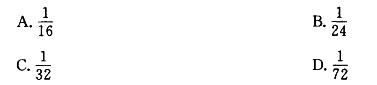
将自然数1~100分别写在完全相同的100张卡片上,然后打乱卡片,先后随机取出4张,问这4张先后取出的卡片上的数字呈增序的几率是多少?()
-
- A.见图A
- B.见图B
- C.见图C
- D.见图D
- 查看答案