Some futurologists have assumed that the vast upsurge of women in the workforce may portend a rejection of marriage. Many women, according to this hypothesis, would rather work than marry.
The converse of this concern is that the prospects of becoming a multi-paycheck household could encourage marriage. In the past, only the earnings and financial prospects of the man counted in the marriage decision. Now, however, the earning ability of a woman can make her more attractive as a marriage partner. Data show that economic downturns tend to putting off marriage because the parties cannot afford to establish a family or are concerned about rainy days ahead. As the economy comes to life, the number of marriages also rises.
The increase in divorce rates follows to the increase in women working outside the home. Yet, it may be wrong to jump to any simple cause-and-effect conclusions. The impact of a wife's work on divorce is no less cloudy than its impact on marriage decisions. The realization that she can be a good provider may increase the chances that a working wife will choose divorce over an unsatisfactory marriage. But the reverse is equally plausible (似是而非). Tensions grounded in financial problems often play a key role in ending a marriage. By raising a family's standard of living, a working wife may strengthen her family's financial and emotional stability. Psychological
factors also should be considered. For example, a wife blocked from a career outside the home may feel caged in the house. She may view her only choice as seeking a divorce. On the other hand, if she-can find fulfillment through work outside the home, work and marriage can go together to create a stronger and more stable union.
Also, a major part of women's inequality in marriage has been due to the fact that, in most cases, men have remained the main breadwinners. A working wife may rob a husband of being the master of the house. Depending upon how the couple reacts to these new conditions, it could create a stronger equal partnership or it could create new insecurities.
The word "portend" (Line l, Para.1) is closest in meaning to_________.
- A.Defy
- B.signal
- C.suffer from
- D.result from
正确答案及解析
正确答案
解析
词义题。根据句意不难理解portend是预示的意思。signal也有显示的意思;defy不服从,反抗;suffer from忍受,遭受;result from由……产生。
包含此试题的试卷
你可能感兴趣的试题
根据《中华人民共和国中国人民银行法》的规定,我国货币政策的最终目标是( ),并以此促进经济增长。
-
- A.保持货币币值稳定
- B.实现充分就业
- C.保持物价稳定
- D.保持利率稳定
- 查看答案
箱子里面有红、白两种玻璃球,红球数比白球数的3倍多两个,每次从箱子里取出7个白球、15个红球。如果经过若干次以后,箱子里只剩下3个白球、53个红球,那么,箱子里原有红球比白球多多少个?
-
- A.102
- B.104
- C.106
- D.108
- 查看答案
市场经济体制下,财政具有的职能有( )。
-
- A.资源配置职能
- B.收入分配职能
- C.经济稳定和发展职能
- D.综合平衡职能
- E.货币发行职能
- 查看答案
以下对政府部门的储蓄,表述正确的是( )。
-
- A.政府部门的储蓄可以是正值,也可以是负值
- B.政府部门的储蓄包括私人储蓄和企业储蓄
- C.政府部门的储蓄一定是正值
- D.政府部门的储蓄一定是负值
- 查看答案
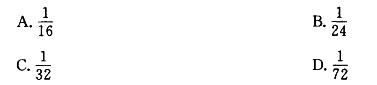
将自然数1~100分别写在完全相同的100张卡片上,然后打乱卡片,先后随机取出4张,问这4张先后取出的卡片上的数字呈增序的几率是多少?()
-
- A.见图A
- B.见图B
- C.见图C
- D.见图D
- 查看答案