阅读理解
Two related paradoxes also emerge from the same basic conception of the aesthetic experience. The first was given extended consideration by Hegel, who argued roughly as follows: our sensuous attention and that gives to the work of art its peculiar individuality. Because it addresses itself to our sensory appreciation, the work of art is essentially concrete, to be understood by an act of perception rather than by a process of discursive thought.
At the same time, our understanding of the work of art is in part intellectual; we seek in it a conceptual content, which it presents to us in the form of an idea. One purpose of critical interpretation is to expound this idea in discursive form—to give the equivalent of the content of the work of art in another, nonsensuous idiom. But criticism can never succeed in this task, for, by separating the content from the particular form, it abolishes its individuality. The content presented then ceases to be the exact content of that work of art. In losing its individuality, the content loses its aesthetic reality; it thus ceases to be a reason for attending to the particular work and that first attracted our critical attention. It cannot be this that we saw in the original work and that explained its power over us.
For this content, displayed in the discursive idiom of the critical intellect, is no more than a husk, a discarded relic of a meaning that eluded us in the act of seizing it. If the content is to be the true object of aesthetic interest, it must remain wedded to its individuality: it cannot be detached from its "sensuous embodiment" without being detached from itself. Content is, therefore, inseparable from form and form in turn inseparable from content. (It is the form that it is only by virtue of the content that it embodies.)
Hegel's argument is the archetype of many, all aimed at showing that it is both necessary to distinguish form from content and also impossible to do so. This paradox may be resolved by rejecting either of its premises, but, as with Kant's antinomy, neither premise seems dispensable. To suppose that content and form are inseparable is, in effect, to dismiss both ideas as illusory, since no two works of art can then share either a content or a form-the form being definitive of each work's individuality.
In this case, no one could ever justify his interest in a work of art by reference to its meaning. The intensity of aesthetic interest becomes a puzzling, and ultimately inexplicable, feature of our mental life. If, on the other hand, we insist that content and form are separable, we shall never be able to find, through a study of content, the reason for attending to the particular work of art that intrigues us. Every work of art stands proxy for its paraphrase. An impassable gap then opens between aesthetic experience and its ground, and the claim that aesthetic experience is intrinsically valuable is thrown in doubt.
1. Hegel argued that .
- A.it is our sensuous appreciation that gives peculiar individuality to the work of art
- B.it is the content of the work of art that holds our attention
- C.the work of art cannot be understood without a process of logical thinking
- D.the form of the work of art is what our sensuous appreciation concentrates on
正确答案及解析
正确答案
解析
本题的答案线索可以在第一段的最后一句话中找到。A项应该是sensuous attention. B项没有提到,C项正是黑格尔所反对的。
包含此试题的试卷
你可能感兴趣的试题
根据《中华人民共和国中国人民银行法》的规定,我国货币政策的最终目标是( ),并以此促进经济增长。
-
- A.保持货币币值稳定
- B.实现充分就业
- C.保持物价稳定
- D.保持利率稳定
- 查看答案
箱子里面有红、白两种玻璃球,红球数比白球数的3倍多两个,每次从箱子里取出7个白球、15个红球。如果经过若干次以后,箱子里只剩下3个白球、53个红球,那么,箱子里原有红球比白球多多少个?
-
- A.102
- B.104
- C.106
- D.108
- 查看答案
市场经济体制下,财政具有的职能有( )。
-
- A.资源配置职能
- B.收入分配职能
- C.经济稳定和发展职能
- D.综合平衡职能
- E.货币发行职能
- 查看答案
以下对政府部门的储蓄,表述正确的是( )。
-
- A.政府部门的储蓄可以是正值,也可以是负值
- B.政府部门的储蓄包括私人储蓄和企业储蓄
- C.政府部门的储蓄一定是正值
- D.政府部门的储蓄一定是负值
- 查看答案
将自然数1~100分别写在完全相同的100张卡片上,然后打乱卡片,先后随机取出4张,问这4张先后取出的卡片上的数字呈增序的几率是多少?()
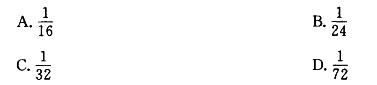
-
- A.见图A
- B.见图B
- C.见图C
- D.见图D
- 查看答案