Passage 2
One evening in February 2007,a student named Paula Ceely brought her car to a stop on a remote road in Wales.She got out to open a metal gate that blocked her path.That’s when she heard the whistle sounded by the driver of a train.Her Renault Clio was parked across a railway line.Seconds later,she watched the train drag her car almost a kilometre down the railway tracks.
Ceely’s near miss made the news because she blamed it on her GPS(导航仪).She had never driven the route before.It was dark and raining heavily.Ceely was relying on her GPS,but it made no mention of the crossing.“I put my complete trust in the device and it led me right into the path of a speeding train,”she told the BBC.
Who is to blame here?Rick Stevenson,who tells Ceely’s story in his book When Machines Fail Us,points the finger at the limitations of technology.We put our faith in digital devices,he says,but our digital helpers are too often not up to the job.They are filled with small problems.And it’s not just GPS devices:Stevenson takes us on a tour of digital disasters involving everything from mobile phones to wireless keyboards.
The problem with his argument in the book is that it’s not clear why he only focuses on digital technology,while there may be a number of other possible causes.A map-maker might have left the crossing off a paper map.Maybe we should blame Ceely for not paying attention.Perhaps the railway authorities are at fault for poor singalling system.Or maybe someone has studied the relative dangers and worked out that there really is something specific wrong with the GPS equipment.But Stevenson doesn’t say.
It’s a problem that runs through the book.In a section on cars,Stevenson gives an account of the advanced techniques that criminals use to defeat computer-based locking systems for cars.He offers two independent sets of figures on car theft;both show a small rise in some parts of the country.He says that once again not all new locks have proved reliable.Perhaps,but maybe it’s also due to the shortage of policemen on the streets.Or changing social circumstances.Or some combination of these factors.
The game between humans and their smart devices is amusing and complex.It is shaped by economics and psychology and the cultures we live in.Somewhere in the mix of those forces there may be a way for a wiser use of technology.
If there is such a way,it should involve more than just an awareness of the shortcomings of our machines.After all,we have lived with them for thousands of years.They have probably been fooling us for just as long.
What is the real concern of the writer of this article?( )
- A.The major causes of traffic accidents and car thefts
- B.The relationship between human and technology
- C.The shortcomings of digital devices we use
- D.The human unawareness of technical problems
正确答案及解析
正确答案
解析
根据文章最后一段If there is such a way,it should involve more than just an awareness of the shortcomings of our machines。可知作者担心的是人类和科技的矛盾关系,故本题正确答案选B。
包含此试题的试卷
你可能感兴趣的试题
根据《中华人民共和国中国人民银行法》的规定,我国货币政策的最终目标是( ),并以此促进经济增长。
-
- A.保持货币币值稳定
- B.实现充分就业
- C.保持物价稳定
- D.保持利率稳定
- 查看答案
箱子里面有红、白两种玻璃球,红球数比白球数的3倍多两个,每次从箱子里取出7个白球、15个红球。如果经过若干次以后,箱子里只剩下3个白球、53个红球,那么,箱子里原有红球比白球多多少个?
-
- A.102
- B.104
- C.106
- D.108
- 查看答案
市场经济体制下,财政具有的职能有( )。
-
- A.资源配置职能
- B.收入分配职能
- C.经济稳定和发展职能
- D.综合平衡职能
- E.货币发行职能
- 查看答案
以下对政府部门的储蓄,表述正确的是( )。
-
- A.政府部门的储蓄可以是正值,也可以是负值
- B.政府部门的储蓄包括私人储蓄和企业储蓄
- C.政府部门的储蓄一定是正值
- D.政府部门的储蓄一定是负值
- 查看答案
将自然数1~100分别写在完全相同的100张卡片上,然后打乱卡片,先后随机取出4张,问这4张先后取出的卡片上的数字呈增序的几率是多少?()
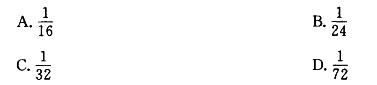
-
- A.见图A
- B.见图B
- C.见图C
- D.见图D
- 查看答案