Passage 10
With so much focus on children's use of screens,it's easy for parents to forget about their own screen use.“Tech is designed to really suck on you in,”says Jenny Radesky in her study of digital play,“and digital products are there to promote maximal engagement.It makes it hard to disengage,and leads to a lot of bleed-over into the family routine.”
Radesky has studied the use of mobile phones and tablets at mealtimes by giving mother-child pairs a food-testing exercise.She found that mothers who sued devices during the exercise started 20 percent fewer verbal and 39 percent fewer nonverbal interactions with their children.During a separate observation,she saw that phones became a source of tension in the family.Parents would be looking at their emails while the children would be making excited bids for their attention.
Infants are wired to look at parents’faces to try to understand their world,and if those faces are blank and unresponsive—as they often are when absorbed in a device—it can be extremely disconcerting for the children.Radesky cites the“still face experiment”devised by developmental psychologist Ed Tronick in the 1970s.In it,a mother is asked to interact with her child in a normal way before putting on a blank expression and not giving them any visual social feedback;The child becomes increasingly distressed as she tries to capture her mother's attention.“Parents don’t have to be exquisitely parents at all times,but there needs to be a balance and parents need to be responsive and sensitive to a child’s verbal or nonverbal expressions of an emotional need,”says Radesky.
On the other hand,Tronick himself is concerned that the worries about kids’use of screens are born out of an“oppressive ideology that demands that parents should always be interacting”with their children:“It’s based on a somewhat fantasized,very white,very upper-middle-class ideology that says if you’re failing to expose your child to 30,000 words you are neglecting them.”Tronick believes that just because a child isn’t learning from the screen doesn’t mean there’s no value to it—particularly if it gives parents time to have a shower,do housework or simply have a break from their child.Parents,he says,can get a lot out of using their devices to speak to a friend or get some work out of the way.This can make them feel happier,which lets then be more available to their child the rest of the time.
According to Tronick,kid’s use of screens may( ).
- A.give their parents some free time
- B.make their parents more creative
- C.help them with their homework
- D.help them become more attentive
正确答案及解析
正确答案
解析
根据人名关键词定位在第四段的中后部分Tronick believes that just because a child isn’t learning from the screen doesn’t mean there’s no value to it—particularly if it gives parents time to have a shower,do housework or simply have a break from their child.可知Tronick认为孩子被电子设备吸引并不是没有任何价值,而是还给了父母做家务的时间,休息的时间。结合选项发现只有A项表达符合文意,故正确答案是选项A。
包含此试题的试卷
你可能感兴趣的试题
根据《中华人民共和国中国人民银行法》的规定,我国货币政策的最终目标是( ),并以此促进经济增长。
-
- A.保持货币币值稳定
- B.实现充分就业
- C.保持物价稳定
- D.保持利率稳定
- 查看答案
箱子里面有红、白两种玻璃球,红球数比白球数的3倍多两个,每次从箱子里取出7个白球、15个红球。如果经过若干次以后,箱子里只剩下3个白球、53个红球,那么,箱子里原有红球比白球多多少个?
-
- A.102
- B.104
- C.106
- D.108
- 查看答案
市场经济体制下,财政具有的职能有( )。
-
- A.资源配置职能
- B.收入分配职能
- C.经济稳定和发展职能
- D.综合平衡职能
- E.货币发行职能
- 查看答案
以下对政府部门的储蓄,表述正确的是( )。
-
- A.政府部门的储蓄可以是正值,也可以是负值
- B.政府部门的储蓄包括私人储蓄和企业储蓄
- C.政府部门的储蓄一定是正值
- D.政府部门的储蓄一定是负值
- 查看答案
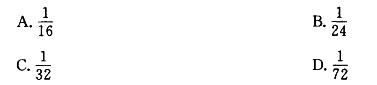
将自然数1~100分别写在完全相同的100张卡片上,然后打乱卡片,先后随机取出4张,问这4张先后取出的卡片上的数字呈增序的几率是多少?()
-
- A.见图A
- B.见图B
- C.见图C
- D.见图D
- 查看答案