资料:Directions : There is 1 passage in this part. The passage is followed by some questions or unfinished statements. For each of them there are four choices , You should decide on the best choice.
Your face is the future of smartphone security. Apple made that clear last week when it unveiled the pricey iPhone X. Apple claims to have conquered many of the challenges that have prevented the widespread use offacial biometrics. But a number of computer-vision researchers say they are skeptical that a smartphone-based system like FaceID can account for things like variable lighting conditions or subtle changes in a person's appearance to create a secure-yet-practical way to unlock a phone a dozen or more times a day.
Apple’s new technology does sound promising. The company says FaceID creates a “precise depth map” of one’s visage by projecting more than 30,000 infrared dots against a person’s face, then using the phone’s infrared TrueDepth camera and high-power microchip to collect and analyze the results. Users are also asked to turn their head as they scan so the phone's machine-learning algorithm can measure the face from several angles and create a more detailed 3-D map of their features. Once the map is created and stored, the iPhone X uses infrared light to help FaceID scan a person’s face even in the dark. Meanwhile, machine-learning algorithms running on the phonekeep track of changes in a person's appearance—including glasses, facial hair and hats—so the smartphone’s accuracy improves over time.
Despite advances in facial recognition in recent years, it remains unclear whether FaceID will work in a variety of conditions while also keeping the iPhone X secure. Hackers, for example, quickly found a way to bypass the Samsung Galaxy S8's facial-recognition scanner when it was introduced in March: They tricked the device by simply showing it a photo of the user. FaceID’s use of 3-D facial maps could address that problem. But historically it has been a big challenge for such a system to recognize faces under different lighting conditions and from a variety of angles.
Apple showed off FaceID last week under relatively controlled conditions, says Arun Ross, a professor of computer science and engineering at Michigan State University. "Clearly the demo was very interesting," he says. "But at the same time some extraordinary claims were made." Apple' s Schiller said, for example, that the chance a random person' s face could unlock someone else' s iPhone X was one in a million——much more secure than TouchID. Ross says, however, that it is not clear how often FaceID fails to recognize its owner. When contacted, Apple declined to elaborate on Schiller' s comments.
“Like all biometrics, FaceID will have a problem with revocation,” says Vitaly Shmatikov, a computer science professor at Cornell Tech. “If a password is compromised, it can be changed—but a face cannot be changed.” Apple touts its ability to secure data on its iPhones, which do not share biometric information with the company’s servers. Still, Ross says, hackers always seem to find a way around even the tightest security.
Which one of the following statements about iPhoneX's FaceID is false according to this article?
- A.It is a whole new technique Apple Inc. applied on iPhone X
- B.It has started a revolution in computer-vision industry
- C.It has a problem of revocation
- D.It has embedded security mechanisms to secure the data on the phone
正确答案及解析
正确答案
解析
本题考查的是细节理解。
【关键词】iPhoneX's FaceID
【主题句】
1.第2自然段Apple’s new technology does sound promising“苹果的新技术的确听起来前途光明”。
2.第5自然段Like all biometrics, FaceID will have a problem with revocation“像所有的生物识别一样,FaceID也面临撤销密码的难题”。
3.第5自然段Apple touts its ability to secure data on its iPhones… “苹果公司推销在苹果手机上能保证数据安全的能力……”
【解析】题目意为“根据文章,下列哪个选项对iPhoneX的面部识别的表述是错误的?”选项A意为“这是苹果公司在iPhoneX上应用的一项全新技术”;选项B意为“它开启了计算机视觉产业的革命”;选项C意为“它在撤销方面存在问题”;选项D意为“它有内嵌的安全机制来保护手机上的数据”。 根据主题句一,选项A正确;根据主题句二,选项C正确;根据主题句三,选项D正确;通过排除法,本题选B。根据第1自然段最后一句话But a number of computer-vision researchers say they are skeptical that...可知苹果的该项技术遭到了计算机视觉研究人员的质疑,并没有在这个领域引起一场(新)革命,文中也确实没有相关说明,故B项说法不符合原文。
你可能感兴趣的试题
根据《中华人民共和国中国人民银行法》的规定,我国货币政策的最终目标是( ),并以此促进经济增长。
-
- A.保持货币币值稳定
- B.实现充分就业
- C.保持物价稳定
- D.保持利率稳定
- 查看答案
箱子里面有红、白两种玻璃球,红球数比白球数的3倍多两个,每次从箱子里取出7个白球、15个红球。如果经过若干次以后,箱子里只剩下3个白球、53个红球,那么,箱子里原有红球比白球多多少个?
-
- A.102
- B.104
- C.106
- D.108
- 查看答案
市场经济体制下,财政具有的职能有( )。
-
- A.资源配置职能
- B.收入分配职能
- C.经济稳定和发展职能
- D.综合平衡职能
- E.货币发行职能
- 查看答案
以下对政府部门的储蓄,表述正确的是( )。
-
- A.政府部门的储蓄可以是正值,也可以是负值
- B.政府部门的储蓄包括私人储蓄和企业储蓄
- C.政府部门的储蓄一定是正值
- D.政府部门的储蓄一定是负值
- 查看答案
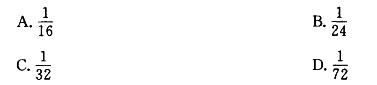
将自然数1~100分别写在完全相同的100张卡片上,然后打乱卡片,先后随机取出4张,问这4张先后取出的卡片上的数字呈增序的几率是多少?()
-
- A.见图A
- B.见图B
- C.见图C
- D.见图D
- 查看答案