资料:Why is Salt Bad for You?
FRANK LE CLAIR, a 58-year-old provincial government employee living in Winnipeg, had no idea that his blood pressure was too high. While out of town last winter, he came down with a cold and a sore throat and decided to see a local doctor.
Apart from checking his cold symptoms, the doctor also gave him a general health-check. The doctor found that Frank’s blood pressure was higher than normal and advised him to see his regular physician as soon as he got home.
Le Clair’s physician referred him to the Winnipeg Health Sciences Centre, where dietitians told him that he might be able to control his blood pressure by changing his lifestyle rather than by taking drugs. People with high blood pressure have to control or eliminate four elements: smoking, drinking, food quantities and salt. Le Clair doesn’t smoke or drink, but there were some changes he could make in the other two categories.
The most conclusive evidence so far that a high-salt diet is bad for you is the “Intersalt” study, involving 10,000 people in 32 countries. It measured the relationship between urinary sodium excretion -- a direct measure of salt consumption -- and blood pressure. The study found that populations with the lowest sodium excretion also have the lowest blood pressures.
Recent studies have shown that “salt sensitivity” is a major factor in the relationship between a high-salt diet and hypertension. And hypertension is a risk factor for two of the biggest killers in this country: coronary heart disease and stroke. Frank Le Clair’s high blood pressure was discovered by chance. There are no warning symptoms -- high blood pressure is known as the silent killer.
A high-salt intake triggers a vicious cycle. Those who are used to a lot of salt in their food find they need increasing amounts to be able to continue to taste its flavour --- the more salt they eat, the more they want. It is also an aggravating factor in osteoporosis and is closely linked to stomach cancer. A high salt intake can be dangerous for people with conditions that are aggravated by fluid retention, such as hepatitis, liver or kidney problems.
Recent research studies have shown that ______.
- A.salt consumption leads to a stroke
- B.sodium excreted in urine is a measure of salt intake
- C.an increase in blood pressure causes an increase in salt consumption
- D.the higher the sodium in urine, the greater the chance of hypertension
正确答案及解析
正确答案
解析
本题考查细节理解。
【关键词】Recent research studies; have shown
【主题句】第3自然段It measured the relationship between urinary sodium excretion -- a direct measure of salt consumption -- and blood pressure. The study found that populations with the lowest sodium excretion also have the lowest blood pressures. 它测量了尿钠的排泄值(一种直接测量盐分摄入量的方法)和血压之间的关系。该研究发现,钠排泄量最低的人群,血压也最低。
第4自然段Recent studies have shown that “salt sensitivity” is a major factor in the relationship between a high-salt diet and hypertension. 最近的研究表明,“盐敏感性”是高盐饮食和高血压之间关系的主要因素。
【解析】题目意为“最近的研究表明,_______。”选项A意为“食盐导致中风”,根据文章,高盐饮食才导致中风,因此选项错误;选项B意为“尿中排泄的钠是测量盐摄入的一种方法”,不属于最新的研究推断,故不符合题意;选项C意为“血压升高导致盐消耗增加”,根据文意,应该是盐耗高导致血压高,因果关系颠倒,故错误;选项D意为“尿中钠越高,高血压的机会就越大”。根据主题句,选项D与题意相符。
你可能感兴趣的试题
根据《中华人民共和国中国人民银行法》的规定,我国货币政策的最终目标是( ),并以此促进经济增长。
-
- A.保持货币币值稳定
- B.实现充分就业
- C.保持物价稳定
- D.保持利率稳定
- 查看答案
箱子里面有红、白两种玻璃球,红球数比白球数的3倍多两个,每次从箱子里取出7个白球、15个红球。如果经过若干次以后,箱子里只剩下3个白球、53个红球,那么,箱子里原有红球比白球多多少个?
-
- A.102
- B.104
- C.106
- D.108
- 查看答案
市场经济体制下,财政具有的职能有( )。
-
- A.资源配置职能
- B.收入分配职能
- C.经济稳定和发展职能
- D.综合平衡职能
- E.货币发行职能
- 查看答案
以下对政府部门的储蓄,表述正确的是( )。
-
- A.政府部门的储蓄可以是正值,也可以是负值
- B.政府部门的储蓄包括私人储蓄和企业储蓄
- C.政府部门的储蓄一定是正值
- D.政府部门的储蓄一定是负值
- 查看答案
将自然数1~100分别写在完全相同的100张卡片上,然后打乱卡片,先后随机取出4张,问这4张先后取出的卡片上的数字呈增序的几率是多少?()
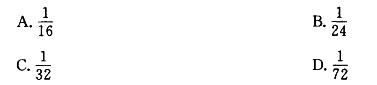
-
- A.见图A
- B.见图B
- C.见图C
- D.见图D
- 查看答案