资料:Special needs students can not only learn from regular education teachers, but can participate in collaborative learning with mainstream students as well. Collaborative learning allows students to work together in groups to complete lessons and assignments.
A number of educators with inclusion classrooms are realizing the benefits of collaborative learning and special needs students being placed in small group environments with regular education classmates. Collaborative learning allows students to converse with one another and brainstorm together in order to find solutions to problems or to complete an assignment. This type of learning allows students of varying ability levels to lend their individual strengths to the group as a whole, thereby encouraging an appreciation of diverse ideas and approaches to problem solving.
Teachers can choose to implement several different types of collaborative learning strategies, depending on the needs of students and the focus of specific assignments. Examples of small-group collaborative learning methods are:
1) The Think-Pair-Share strategy, which involves each student in the group taking one minute to formulate a response to the teacher's question, then sharing individual findings with a partner. After collaborating in pairs, students can then share input with slightly larger groups or with the entire class.
2) The Simple Jigsaw strategy, which involves four-person teams splitting a teacher-assigned task into equal parts. Each student in the group acts as an "expert" on one section of the assignment and meets with corresponding "experts" in other groups for discussion and task mastering. Students then return to their initial teams to share their knowledge of the task with other members.
3) The Three-Step Interview strategy, through which students initially break into pairs and take turns interviewing one another about an assignment. Each pair of students then combine with another pair in order to enhance the discussion.
4) The Numbered Heads Together strategy, where each team member is assigned a number, then instructed to collaborate on a question. The teacher then calls a number randomly, and the student in each group who has that number acts as spokesperson in answering the question. Each student must be prepared for the possibility of having his or her number chosen.
The benefits of collaborative learning and special needs students having the opportunity to engage in small group tasks can produce positive results in regard to classroom organization and management. Teachers who research tips on collaborative learning and implement the practice with students are likely to have a successful inclusion classroom.
Which following one is NOT true about the “Simple Jigsaw strategy”? ( )
- A.Task mastering students work on a teacher-assigned task
- B.It involves four-person teams
- C.Each student in the group acts as an “expert”
- D.teacher-assigned task is divided into equal parts
正确答案及解析
正确答案
解析
本题考查细节理解。
【关键词】not true;Simple Jigsaw strategy
【主题句】第5自然段The Simple Jigsaw strategy, which involves four-person teams splitting a teacher-assigned task into equal parts. Each student in the group acts as an "expert" on one section of the assignment and meets with corresponding "experts" in other groups for discussion and task mastering. Students then return to their initial teams to share their knowledge of the task with other members.
简单的拼图策略,它由四人组成一组,将教师分配的任务分成相等的部分。小组中的每一个学生在作业的一部分担任“专家”,并在其他小组与同一任务的“专家”进行讨论和任务掌握。然后,学生返回到最初的团队,与其他成员分享任务的知识。
【解析】本题的问题是“关于简单的拼图策略,以下哪一项是不正确的?”。主题句中,B、C、D三个选项均有涉及,故选A。选项A强调任务是由教师分配的,因此错误。
你可能感兴趣的试题
根据《中华人民共和国中国人民银行法》的规定,我国货币政策的最终目标是( ),并以此促进经济增长。
-
- A.保持货币币值稳定
- B.实现充分就业
- C.保持物价稳定
- D.保持利率稳定
- 查看答案
箱子里面有红、白两种玻璃球,红球数比白球数的3倍多两个,每次从箱子里取出7个白球、15个红球。如果经过若干次以后,箱子里只剩下3个白球、53个红球,那么,箱子里原有红球比白球多多少个?
-
- A.102
- B.104
- C.106
- D.108
- 查看答案
市场经济体制下,财政具有的职能有( )。
-
- A.资源配置职能
- B.收入分配职能
- C.经济稳定和发展职能
- D.综合平衡职能
- E.货币发行职能
- 查看答案
以下对政府部门的储蓄,表述正确的是( )。
-
- A.政府部门的储蓄可以是正值,也可以是负值
- B.政府部门的储蓄包括私人储蓄和企业储蓄
- C.政府部门的储蓄一定是正值
- D.政府部门的储蓄一定是负值
- 查看答案
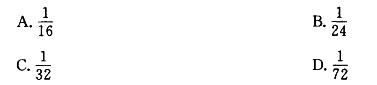
将自然数1~100分别写在完全相同的100张卡片上,然后打乱卡片,先后随机取出4张,问这4张先后取出的卡片上的数字呈增序的几率是多少?()
-
- A.见图A
- B.见图B
- C.见图C
- D.见图D
- 查看答案