资料:Children back at school, nights slowly starting to draw in and the weather more changeable. The seasons are turning and after an eerily calm summer for financial markets, there's a whiff of uncertainty in the air. Bond yields are up from their lows, and the relentless migration of global capital towards any asset, anywhere, with some yield, is slowing.
The concern is the growing awareness of central banks' waning ability to boost growth with ever-lower interest rates and ever-bigger purchases of assets. The debate about if, when and how slowly the US Federal Reserve will raise interest drags on, but if downward pressure on global bond yields from the European Central Bank (ECB) and the Bank of Japan's (BOJ) largesse is drawing to a close, that's a bigger milestone for markets.
A world of higher bond yields is one where the pressure to seek yield in exotic places is diminished. It's also a world where the capital gains that accompanied falling yields become capital losses and investors question the merit of bonds over cash (or equities).
This search for yield in exotic places has, since the end of January, helped the Brazilian real gain more than 20% against the US dollar, with the Russian rouble managing almost as much. The dollar, itself, has fallen back is by 7.5% fall in trade-weighted terms, unwinding nearly 40% of the gains it has seen since mind-2014.
There's no need to panic about bond yields rising, because rate rises in Japan or the Eurozone are years away and the Fed's still tinkering. But 10-year yields on both German and Japanese government bond yields fell below zero for the first time in late June. They have been edging higher through the summer. It's almost as if investors really aren't that keen on tying money up at negative yields for that long – why not stick to cash?
In the US, estimates of "neutral" real interest rates are tumbling to around zero. Estimates of how much slack there is left in the labour market are being revised up and after five years when productivity growth has averaged a measly 0.5%, there's widespread acceptance that it's unlikely to accelerate by magic.
But even if we take all of this into account, markets are now pricing in an extraordinarily slow pace of rate hikes by the Fed – from their current 0.25-0.5% range, to about 0.75% by the end of 2017 and to 1% by the end of 2018.
GDP growth still oscillates around 2%, the Fed's favoured measure of inflation is at 1.6% and the unemployment rate is trending lower. The pricing of the future path of short term rates seems too low even for the "new normal" economic environment.
All of these currencies have gained against the pound and I can't see that changing. Too much importance should not be placed on either the collapse in confidence immediately after the vote to leave the EU or the subsequent bounce.
The economic impact of leaving the EU will be felt through delayed investment decisions as a result of uncertainty about when and on what terms it happens. A debilitating rather than a corrosive impact on the economy will be seen in slower, but positive growth. It will also be felt in further (slower) sterling weakness.
The Bank of England has already cut policy rates from 0.5% to 0.25%, and there's more to come from both the Bank and the pound over the next year. A 5% fall from here would take the pound close to €1.1, and we could see it fall below $1.25 as the Federal Reserve edges rates higher.
According to the last paragraph which of the followings is Not true?
After Britain leaving the E.U the investment decision of investors has been affected
- A.After Britain leaving the E.U the investment decision of investors has been affected
- B.After Britain leaving the E.U, the value of the pound will be seen weakened further
- C.After Britain leaving the E.U, the fed takes this opportunity to raise the rate
- D.After Britain leaving the
- E.U, the Bank of England has already cut policy rates to 0.25%
正确答案及解析
正确答案
解析
本题考查的是细节理解。
【关键词】Not true
【主题句】倒数第一段The Bank of England has already cut policy rates from 0.5% to 0.25%,and there’s more to come from both the Bank and the pound over the next year. A 5% fall from here would take the pound close to €1.1 and we could see it fall below $1.25 as the Federal Reserve edges rates higher. 英格兰银行已经将政策利率从0.5%降至0.25%,明年银行和英镑将面临更大的下行压力。下降5%会造成英镑与欧元的比率接近1:1.1。随着美联储边际利率走高,我们将看到英镑跌破1.25美元。倒数第二段The economic impact of leaving the EU will be felt through delayed investment decisions as a result of uncertainty about when and on what terms it happens. 离开欧盟的经济影响将通过延迟投资决策而感受到,这是由于何以及何种条件下发生的不确定性造成的。
【解析】本题问的是“根据最后一自然段,以下哪一选项不是正确的?”选项A意为“英国脱欧之后,投资者的决策受到了影响。”结合主题句,投资者决策延迟,因而还暂未收到影响,故错误;选项B意为“英国脱欧之后,英镑的价值将被进一步削弱。”结合主题句,故正确;选项C意为“英国脱欧之后,美联储借机提高利率。”结合主题句正确;选项D意为“英国脱欧之后,英格兰银行已经将政策利率下调至0.25%。”结合主题句正确。选项A句意虽正确,但是最后一段并未提到此意,与题意无关。
你可能感兴趣的试题
根据《中华人民共和国中国人民银行法》的规定,我国货币政策的最终目标是( ),并以此促进经济增长。
-
- A.保持货币币值稳定
- B.实现充分就业
- C.保持物价稳定
- D.保持利率稳定
- 查看答案
箱子里面有红、白两种玻璃球,红球数比白球数的3倍多两个,每次从箱子里取出7个白球、15个红球。如果经过若干次以后,箱子里只剩下3个白球、53个红球,那么,箱子里原有红球比白球多多少个?
-
- A.102
- B.104
- C.106
- D.108
- 查看答案
市场经济体制下,财政具有的职能有( )。
-
- A.资源配置职能
- B.收入分配职能
- C.经济稳定和发展职能
- D.综合平衡职能
- E.货币发行职能
- 查看答案
以下对政府部门的储蓄,表述正确的是( )。
-
- A.政府部门的储蓄可以是正值,也可以是负值
- B.政府部门的储蓄包括私人储蓄和企业储蓄
- C.政府部门的储蓄一定是正值
- D.政府部门的储蓄一定是负值
- 查看答案
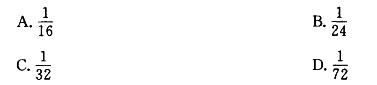
将自然数1~100分别写在完全相同的100张卡片上,然后打乱卡片,先后随机取出4张,问这4张先后取出的卡片上的数字呈增序的几率是多少?()
-
- A.见图A
- B.见图B
- C.见图C
- D.见图D
- 查看答案