资料:(一)
Insurance is the sharing of risks, Nearly everyone is exposed to risk of some sort. The house owner, for example, knows that his property can be damaged by fire, the ship owner knows that his vessel may be lost at sea;the breadwinner knows that he may die at an early age and leave his family the poorer. On the other hand, not every house is damaged by fire nor every vessel lost at sea. If these persons each put a small sum of money into a pool, there will be enough to meet the needs of the few who do suffer loss, In other words, the losses of the few are met from the contributions of the money. This is the basis of insurance, Those who pay the contribution are known as “insured”and those who administer the pool of contributions as ”insurers”.
Not all risks can be covered by insurance. Broadly speaking, the ordinary risks of business and speculation cannot be covered. The risk that buyers will not buy goods at the prices offered is not of a kind that can be statistically estimated, and risks can only be insured against if they can be so estimated.
The legal basis of all insurance is the “policy”. This is a printed form of contract. It states that in return for the regular payment by the insured of a certain sum of money, called the “premium”, which is usually paid every year, the insurer will pay a sum of money or compensation for loss, if the risk actually happens. The wording of policies, particularly in marine insurance, often seems very old-fashioned, but there is a sound reason of this. Over a large number of years, many law cases have been brought to clear up the meanings of doubtful phrases in policies. The law courts have given these phrases a definite and indisputable meaning, and to avoid future disputes the phrases have continued to be used in polices even when they have passed out of normal use in speech.
The phrase “the pool of contributions”in the first paragraph means______.
- A.the money paid by the insurers
- B.the cost of administering insurance
- C.the money paid by the insured
- D.the amount of each premium
正确答案及解析
正确答案
解析
本题考查的是细节理解及词义替换。
【关键词】 "the pool of contribution”; in the first paragraph
【主题句】第1自然段 If these persons each put a small sum of money into a pool, there will be enough to meet the needs of the few who do suffer loss. In other words, the losses of the few are met from the contributions of the money. This is the basis of insurance. Those who pay the contribution are known as "insured" and those who administer the pool of contributions as "insurers".如果这些人每人拿出一小笔钱来汇聚成一片汪洋,就会有足够的钱来满足少数的确遭受损失的人的需求。换言之,少数人的损失是由缴纳的钱来支付的,这是保险的基础。缴纳摊款的人被称为“被保险人”,而管理款项总额的人被称为“保险公司”。
【解析】本题的问题是“第1自然段中,短语 “the pool of contribution”(款项总额)的意思是_______”。 A选项“保险公司支付的款项”;B选项“管理保险的费用”;C选项“被保险人支付的款项”;D选项“每笔保险费的金额”。根据题目中关键词找到主题句,主题句中,短语"the pool of contribution”是使用了修辞手法,其实质就是保险费的总和,即被保险人支付的款项。故C选项正确。
你可能感兴趣的试题
根据《中华人民共和国中国人民银行法》的规定,我国货币政策的最终目标是( ),并以此促进经济增长。
-
- A.保持货币币值稳定
- B.实现充分就业
- C.保持物价稳定
- D.保持利率稳定
- 查看答案
箱子里面有红、白两种玻璃球,红球数比白球数的3倍多两个,每次从箱子里取出7个白球、15个红球。如果经过若干次以后,箱子里只剩下3个白球、53个红球,那么,箱子里原有红球比白球多多少个?
-
- A.102
- B.104
- C.106
- D.108
- 查看答案
市场经济体制下,财政具有的职能有( )。
-
- A.资源配置职能
- B.收入分配职能
- C.经济稳定和发展职能
- D.综合平衡职能
- E.货币发行职能
- 查看答案
以下对政府部门的储蓄,表述正确的是( )。
-
- A.政府部门的储蓄可以是正值,也可以是负值
- B.政府部门的储蓄包括私人储蓄和企业储蓄
- C.政府部门的储蓄一定是正值
- D.政府部门的储蓄一定是负值
- 查看答案
将自然数1~100分别写在完全相同的100张卡片上,然后打乱卡片,先后随机取出4张,问这4张先后取出的卡片上的数字呈增序的几率是多少?()
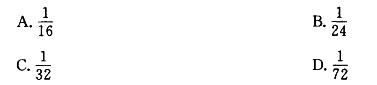
-
- A.见图A
- B.见图B
- C.见图C
- D.见图D
- 查看答案