资料:Google and Uber have grabbed most of the attention regarding the advent of self-driving cars, but on Sunday, Lyft threw down the ultimate challenge: A majority of autonomous vehicles for Lyft within a mere five years.
The bold claim was made by Lyft co-founder John Zimmer in a post on Medium outlining his company's vision for the next decade.
"Within five years a fully autonomous fleet of cars will provide the majority of Lyft rides across the country," said Zimmer, indicating that early versions of such cars have been in operation in San Francisco and Phoenix.
Usually when tech founders lay out their vision, it’s typical to hear grand claims that almost push the boundaries of believability. That's what tech innovation is about. But in the case of self-driving cars, the situation is a bit more complicated.
Uber has already begun rolling out self-driving car tests in Pittsburgh and Google is hard at work on the same kind of solution on the West Coast. Therefore, talk of getting self-driving cars on the road is, at this point, less about the technology and more about logistics. We know Google has enough cash to triple down on any initiative it decides to tackle. And as the current ride-sharing leader in the U.S., Uber has enough market share-powered credibility that a future including self-driving Uber cars isn't unrealistic.
Today there are some internet-based ride sharing system but to overcome the critical mass the system has to be real-time, automated and extremely easy to use.
However in the case of Lyft, which continues to struggle against Uber (one report claims that Uber has over 80 percent market share in the U.S.), such a short timeline toward rolling out a fleet of self-driving cars seems somewhat ambitious. Nevertheless, Zimmer continues his vision essay with even more bold predictions.
"By 2025, private car ownership will all but end in major U.S. cities," says Zimmer, a prediction that, if it turns out to be true, would mean it would take just eight years for the majority of the human-driven cars on U.S. roads to disappear. Possible? Sure. Likely? Eight years seems like, once again, a bit of wishful thinking on Zimmer's part.
Remember, it hasn't even been 10 years since the arrival of the iPhone, and as recent events prove, smartphones are still a category that can yield catastrophic results if not done right. And those are just mobile devices, not vehicles entrusted with transporting and protecting human lives.
To be fair, Zimmer's essay does offer some facts and figures in an attempt to back up his positions, but much of it doesn't appear to take into account variables such as the heavily embedded interests of automobile companies still relying on consumer auto sales, as well as the many legal and roadway logistics that will need to be addressed in order to bring about this massive transformation in such a short time.
Oddly, Zimmer's vision does little to address the millions of human jobs that will be lost once self-driving cars displace not only taxi drivers, but truck drivers.
"We believe that in the first five or more years following the introduction of autonomous vehicles, the need for human drivers will actually increase, not decrease," writes Zimmer. "When autonomous cars can only solve a portion of those trips, more Lyft drivers will be needed to provide service to the growing market of former car owners," writes Zimmer.
But what about after five years, when autonomous cars can provide full service? What about the human drivers? The pushback from human drivers losing work will likely be another, major ripple in the evolution of self-driving cars, as well as other automated systems entering U.S. society in coming years.
However, none of these logistical issues diminish Zimmer's ideas. His vision of the future of autonomous vehicles seems quite logical and in step with most who work in and watch the space closely. But the speed bump in accepting his vision wholesale is his ambitious self-driving car timeline in general, and for Lyft in particular.
- A.We need to reach everyone’s potential to realize self-driving cars
- B.There are still many problems to be solved in self-driving cars
- C.Lyft co-founder says most of its cars will be autonomous in 5 years
- D.The advantages and disadvantages of self-driving cars
正确答案及解析
正确答案
解析
本题考查主旨大意。
【关键词】best title of the passage
【主题句】but on Sunday Lyft threw down the ultimate challenge: A majority of autonomous vehicles for Lyft within a mere five years. 但是在周六,叫车应用“来福”(Lyft)抛出了终极挑战:在仅仅五年后,大部分来福车将是自动驾驶车辆。
【解析】题目意为“文章最好的题目是?”选项A意为“我们需要开发每个人的潜力来实现自动驾驶汽车”,选项B意为“实现自动驾驶汽车还有很多问题需要解决”,选项C意为“Lyft联合创始人说大部分汽车将在五年内实现自动驾驶”,选项D意为“自动驾驶汽车的优缺点”,本篇文章文体是社会新闻类,此类文体往往在开篇抛出新闻事件,同时也是全文的核心内容,因此答案C正确。
你可能感兴趣的试题
根据《中华人民共和国中国人民银行法》的规定,我国货币政策的最终目标是( ),并以此促进经济增长。
-
- A.保持货币币值稳定
- B.实现充分就业
- C.保持物价稳定
- D.保持利率稳定
- 查看答案
箱子里面有红、白两种玻璃球,红球数比白球数的3倍多两个,每次从箱子里取出7个白球、15个红球。如果经过若干次以后,箱子里只剩下3个白球、53个红球,那么,箱子里原有红球比白球多多少个?
-
- A.102
- B.104
- C.106
- D.108
- 查看答案
市场经济体制下,财政具有的职能有( )。
-
- A.资源配置职能
- B.收入分配职能
- C.经济稳定和发展职能
- D.综合平衡职能
- E.货币发行职能
- 查看答案
以下对政府部门的储蓄,表述正确的是( )。
-
- A.政府部门的储蓄可以是正值,也可以是负值
- B.政府部门的储蓄包括私人储蓄和企业储蓄
- C.政府部门的储蓄一定是正值
- D.政府部门的储蓄一定是负值
- 查看答案
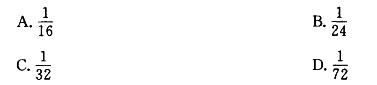
将自然数1~100分别写在完全相同的100张卡片上,然后打乱卡片,先后随机取出4张,问这4张先后取出的卡片上的数字呈增序的几率是多少?()
-
- A.见图A
- B.见图B
- C.见图C
- D.见图D
- 查看答案