资料:Are walkers smarter than drivers?
A report published last month says metropolitan areas in the United States that were found to be more pedestrian-friendly also often had higher levels of GDP -and their citizens were better educated.
The study was conducted by Smart Growth America, an urban advocacy group based in the District of Columbia. It looked at the 30 biggest metro zones in the US, and ranked them by how much office, retail, and residential area was conducive to walking.
The question is, why? Do brainier people just like to walk and not drive? It's a complicated answer. What we don't know is whether walkable places attract educated people, or whether educated people move to certain places that then become more walkable.
That's not all: Education levels aren't just higher in walkable cities. GDP is, too. The gap between the highest and lowest urban metros by GDP in the study is a chasm of 49%, which scholar calls a "first and second world gap. This is serious stuff."
Of course, correlation doesn't equal causation. There's not enough data to definitively say why these urban areas are filled with educated people. But it's definitely a starting point for conversation: Many socioeconomic and generational trends the world over could help explain why university graduates gravitate toward crowded, subway-lined metropolises these days. In fact, such an intellectual influx has started to change the entire faces of some urban areas.
Increased urbanization isn't the only reason car-eschewing cities see smarter citizens. Young people play a role, too. Millennials-those born between around 1981 and 1996-are the most educated generation in history. Nearly half of them hold a bachelor's degree or higher. They're also all moving to cities, unlike their parents. These spikes in the workforce translate into metros with higher GDP and higher overall education levels.
What can be the possible explanation according to the study?
- A.Urbanization
- B.Young people
- C.Both
- D.Unknown
正确答案及解析
正确答案
解析
本题考查的是细节理解。
【关键词】possible explanation according to the study
【主题句】第6自然段Increased urbanization isn't the only reason car-eschewing cities see smarter citizens. Young people play a role, too. 少开车的城市,公民更智慧,这不仅仅是城市化进程加快引起的。年轻人也发挥了作用。
【解析】本题的问题是“根据本项研究,哪一项是可能的解释?”。A选项“城市化”;B选项“年轻人”;C选项“两者都是”;D选项“未知”。根据题目中关键词找到主题句,主题句中,提到了两项主要原因是城市化和年轻人,故选C。
你可能感兴趣的试题
根据《中华人民共和国中国人民银行法》的规定,我国货币政策的最终目标是( ),并以此促进经济增长。
-
- A.保持货币币值稳定
- B.实现充分就业
- C.保持物价稳定
- D.保持利率稳定
- 查看答案
箱子里面有红、白两种玻璃球,红球数比白球数的3倍多两个,每次从箱子里取出7个白球、15个红球。如果经过若干次以后,箱子里只剩下3个白球、53个红球,那么,箱子里原有红球比白球多多少个?
-
- A.102
- B.104
- C.106
- D.108
- 查看答案
市场经济体制下,财政具有的职能有( )。
-
- A.资源配置职能
- B.收入分配职能
- C.经济稳定和发展职能
- D.综合平衡职能
- E.货币发行职能
- 查看答案
以下对政府部门的储蓄,表述正确的是( )。
-
- A.政府部门的储蓄可以是正值,也可以是负值
- B.政府部门的储蓄包括私人储蓄和企业储蓄
- C.政府部门的储蓄一定是正值
- D.政府部门的储蓄一定是负值
- 查看答案
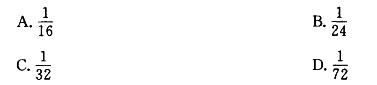
将自然数1~100分别写在完全相同的100张卡片上,然后打乱卡片,先后随机取出4张,问这4张先后取出的卡片上的数字呈增序的几率是多少?()
-
- A.见图A
- B.见图B
- C.见图C
- D.见图D
- 查看答案