资料:Even as rich countries seek to rid workplaces of subtle gender bias, in many developing ones discrimination remains overt. According to the World Bank, women are barred from certain jobs in 104 countries.(1)
“Gender equality in labour law is associated with more women working and earning more relative to men,” says Sarah Iqbal of the Bank. Yet some countries publish lists of jobs deemed too dangerous for women (Russia’s 456 include driving a train or steering a ship). Others stop women from working in entire sectors, at night or in “morally inappropriate” jobs (in Kazakhstan women cannot bleed or stun cattle, pigs or small ruminants). In four countries women cannot register a business. In 18 a husband can stop his wife working. A(2)
The aim is often to protect the “weaker sex”. Some laws put women in the same category as children; they concern jobs seen as physically tough, such as mining, construction and manufacturing. Others relate to broader safety fears. In Mumbai, for example, female shopkeepers cannot work as late as male ones. Other laws are intended to protect capacity to bear children. “Such policies often have demographic motivations, especially in countries with low birth rates,” says Ms Iqbal. (3)
Restrictions on night work originated in England during the Industrial Revolution. B In 1948 the International Labour Organisation (ILO) still sought to keep women away from mines and industrial nightwork. Spain did not lift restrictions on female workers in mining, electricity and some construction jobs until 1995. Some bans on women’s work still in place in former colonies are remnants of the 1960 Spanish Civil Code, the Napoleonic Code or Commonwealth laws. (4)
Some laws are of surprisingly recent origin: Vietnam’s ban on women driving tractors of 50 horsepower or more came into force in 2013. But on balance, the trend is towards liberalisation. In recent years Bulgaria, Kiribati and Poland have removed all restrictions; Colombia and Congo have got rid of some. Other countries have changed laws in light of technological advances that have made many jobs safer and less reliant on brute force, or have seen courts overturn bans as discriminatory. C(5)
Labour shortages are also leading to change. When many male miners left Marmato, in Colombia, to find better pay elsewhere, female replacements were tolerated, even though hiring them broke the law. Similarly, when male truckers in eastern European countries that joined the European Union left for western ones, pressure to let women replace them increased. And the end of a ban on women working nights in the Philippines in 2011 was cheered on by call-centres, which need staff during daytime in America and Europe. (6)
Some sex-specific restrictions are called for, says the ILO, particularly in the case of pregnant and breast-feeding women, for example when working with chemicals.(Such temporary and specific precautions are not counted in the World Bank’s study.) But, concludes the ILO, blanket protective prohibitions are “increasingly obsolete”. D(7)
What does “blanket protective prohibitions are ‘increasingly obsolete’” mean in the last paragraph?
- A.In blanket industry, the work restrictions on women have become very strict
- B.Restrictions on women in blanket industry have taken off in some countries
- C.In order to protect women’s rights, work restrictions should be banned
- D.Work restrictions that claim to protect all women are no longer popular
正确答案及解析
正确答案
解析
本题考查的是推理判断。
【关键词】“blanket protective prohibitions are ‘increasingly obsolete’” ; mean; in the last paragraph
【主题句】第7自然段Some sex-specific restrictions are called for, says the ILO, particularly in the case of pregnant and breast-feeding women, for example when working with chemicals.(Such temporary and specific precautions are not counted in the World Bank’s study.) But, concludes the ILO, blanket protective prohibitions are “increasingly obsolete”. 国际劳工组织称,需要一些针对性别的限制要求,打比方说,特别是妇女在怀孕和哺乳的情况下从事化工工作(这种临时和具体的预防措施不计入世界银行的研究中)。但是,国际劳工组织总结说,全面保护性禁令“越来越过时”。
【解析】本题的问题是“全面保护禁令'越来越过时'在最后一段意味着什么?” A选项“在毛毯行业,对女性的工作限制变得非常严格”;B选项“一些国家已经解除毛毯行业对妇女的工作限制”;C选项“为了保护妇女的权利,应该废除工作限制”;D选项“声称保护女性的工作限制不再受欢迎”。根据主题句可知,国际劳工组织对全面保护禁令持否定态度,主张除特殊情况外解除对女性从业限制,故选C。
你可能感兴趣的试题
根据《中华人民共和国中国人民银行法》的规定,我国货币政策的最终目标是( ),并以此促进经济增长。
-
- A.保持货币币值稳定
- B.实现充分就业
- C.保持物价稳定
- D.保持利率稳定
- 查看答案
箱子里面有红、白两种玻璃球,红球数比白球数的3倍多两个,每次从箱子里取出7个白球、15个红球。如果经过若干次以后,箱子里只剩下3个白球、53个红球,那么,箱子里原有红球比白球多多少个?
-
- A.102
- B.104
- C.106
- D.108
- 查看答案
市场经济体制下,财政具有的职能有( )。
-
- A.资源配置职能
- B.收入分配职能
- C.经济稳定和发展职能
- D.综合平衡职能
- E.货币发行职能
- 查看答案
以下对政府部门的储蓄,表述正确的是( )。
-
- A.政府部门的储蓄可以是正值,也可以是负值
- B.政府部门的储蓄包括私人储蓄和企业储蓄
- C.政府部门的储蓄一定是正值
- D.政府部门的储蓄一定是负值
- 查看答案
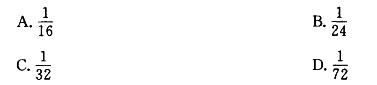
将自然数1~100分别写在完全相同的100张卡片上,然后打乱卡片,先后随机取出4张,问这4张先后取出的卡片上的数字呈增序的几率是多少?()
-
- A.见图A
- B.见图B
- C.见图C
- D.见图D
- 查看答案