资料:It is September of 1998, I’m sitting in a windowless office room inside the Office of the Independent Counsel underneath humming fluorescent lights. I'm listening to the sound of my voice on surreptitiously taped phone calls that a supposed friend had made the year before. For the past eight months, the mysterious content of these tapes has hung like the Sword of Damocles over my head. A few days later, the Star Report is released to Congress, and all of those tapes and transcripts, those stolen words, form a part of it. That people can read the transcripts is horrific enough, but a few weeks later, the audio tapes are aired on TV, and significant portions made available online. The pubic humiliation was excruciating. (1)
This was not something that happened with regularity back then in 1998, and by this, I mean the stealing of people's private words, actions, conversations or photos, and then making them public—public without consent, context, and compassion. (2)
Fast forward 12 years to 2010, and now social media has been born. The landscape has sadly become much more populated with instances like mine, whether or not someone actually make a mistake, and now it's for both public and private people. The consequences for some have become very dire. (3)
A young college freshman from Rutgers University named Tyler Clementi-sweet, sensitive and creative—was secretly webcammed by his roommate while being intimate with another man. When the online world learned of this incident, the ridicule and cyberbullying ignited. A few days later, Tyler jumped from the George Washington Bridge to his death. He was 18. (4)
Today, too many parents haven't had the chance to step in and rescue their loved ones. Tyler's tragic, senseless death was a turning point for me. It served to recontextualize my experiences, and I then began to look at the world of humiliation and bullying around me and see something different. In 1998, we had no way of knowing where this brave new technology called the Internet would take us. Since then, it has connected people in unimaginable ways, joining lost siblings, saving lives, launching revolutions, but the darkness and cyberbullying that I experienced had mushroomed. Every day online, people, especially young people who are not developmentally equipped to handle this, are so abused and humiliated that they can't imagine living to the next day, and some, tragically, don't, and there's nothing virtual about that. A meta-analysis done out of the Netherlands showed that for the first time, cyberbullying was leading to suicidal ideations more significantly than offline bullying. And you know what shocked me, although it shouldn't have, was other research last year that determined humiliation was a more intensely felt emotion than either happiness or even anger. (5)
Cruelty to others is nothing new, but online, technologically enhanced shaming is amplified, uncontained, and permanently accessible. The echo of embarrassment used to extend only as far as your family, village, school or community, but now it's the online community too. Millions of people, often anonymously, can stab you with their words, and that's a lot of pain, and there are no perimeters around how many people can publicly observe you and put you in a public stockade. There is a very personal price to public humiliation, and the growth of the Internet has jacked up that price. (6)
For nearly two decades now, we have slowly been sowing the seeds of shame and public humiliation in our cultural soil, both on- and offline. Gossip websites, paparazzi, reality programming, politics, news outlets and sometimes hackers all traffic in shame. It's led to desensitization and a permissive environment online which lends itself to trolling, invasion of privacy, and cyberbullying. This shift has created what Professor Nicolaus Mills calls a culture of humiliation. But in this culture of humiliation, there is another kind of price tag attached to public shaming. The price does not measure the cost to the victim, which Tyler and too many others, not
- A.noting is true with the phenomenon that young people died of cyberbullying
- B.the claim that young people cannot imagine living to the next day is not the fact
- C.research shows that suicidal ideations are caused more by the online bullying
- D.many young people take their own lives not online but in reality
正确答案及解析
正确答案
解析
本题考查的是推理判断。
【关键词】“there's nothing virtual about that” (Paragraph 5); because
【主题句】第5自然段Every day online, people, especially young people who are not developmentally equipped to handle this, are so abused and humiliated that they can't imagine living to the next day, and some, tragically, don't, and there's nothing virtual about that. A meta-analysis done out of the Netherlands showed that for the first time, cyberbullying was leading to suicidal ideations more significantly than offline bullying. And you know what shocked me, although it shouldn't have, was other research last year that determined humiliation was a more intensely felt emotion than either happiness or even anger. 每天,在网络上都会有人,特别是年轻人被辱骂和羞辱,而他们对此束手无策。这些辱骂和羞辱让他们想立刻死去。悲剧的是,有些人,真的因此死去。这一点儿也不虚拟。一份来自荷兰的综合分析首次披露,网络欺凌比线下欺凌更容易让人产生自杀的念头。去年,还有一项研究让我震惊,尽管我并不该感到震惊,研究显示,羞辱是比快乐或者生气更为强烈的情绪。
【解析】本题的问题是“作者说‘这并不是虚构’(第5段),因为______ ”。 A选项“年轻人死于网络欺凌的现象确实如此”;B选项“年轻人无法想象生活到第二天的说法不是事实”;C选项“研究表明,自杀念头更多是由网络欺凌引起的”;D选项“许多年轻人是在现实中,而非互联网上过自己的生活”。根据主题句,文章描述了年轻人在面对网络暴力时无力招架,选择轻生,‘这并不是虚构’恰恰是强调了像泰勒这样的年轻人情况的普遍性,故选A。
你可能感兴趣的试题
根据《中华人民共和国中国人民银行法》的规定,我国货币政策的最终目标是( ),并以此促进经济增长。
-
- A.保持货币币值稳定
- B.实现充分就业
- C.保持物价稳定
- D.保持利率稳定
- 查看答案
箱子里面有红、白两种玻璃球,红球数比白球数的3倍多两个,每次从箱子里取出7个白球、15个红球。如果经过若干次以后,箱子里只剩下3个白球、53个红球,那么,箱子里原有红球比白球多多少个?
-
- A.102
- B.104
- C.106
- D.108
- 查看答案
市场经济体制下,财政具有的职能有( )。
-
- A.资源配置职能
- B.收入分配职能
- C.经济稳定和发展职能
- D.综合平衡职能
- E.货币发行职能
- 查看答案
以下对政府部门的储蓄,表述正确的是( )。
-
- A.政府部门的储蓄可以是正值,也可以是负值
- B.政府部门的储蓄包括私人储蓄和企业储蓄
- C.政府部门的储蓄一定是正值
- D.政府部门的储蓄一定是负值
- 查看答案
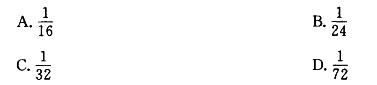
将自然数1~100分别写在完全相同的100张卡片上,然后打乱卡片,先后随机取出4张,问这4张先后取出的卡片上的数字呈增序的几率是多少?()
-
- A.见图A
- B.见图B
- C.见图C
- D.见图D
- 查看答案