资料:There's a good chance that spicy crunchy tuna roll you ordered for lunch doesn't actually contain any tuna at all.
That's because 74% of fish sold at sushi venues in the US is mislabeled and often completely different than what's on the menu, according to a 2013 survey from the ocean conservation group Oceana.
But new technology could help make the seafood business a bit more transparent. Google is teaming up with Oceana and the aerial and satellite imaging nonprofit SkyTruth to launch Global Fishing Watch this fall, the New York Times reports. The initiative will track and analyze fishing boat practices using satellite technology and, ideally, help ensure that fewer fake or mislabeled fish are swapped in along the way.
Seafood providers are also investing in technology to reduce fraud. Boston seafood distributor Red's Best, for example, has increased transparency by selling fish with labels that buyers can scan with their smartphones to access a web page that provides details about the individual fish, including where the fish came from, the New York Times reports.
Even if a restaurant serves some real, correctly labeled fish, 95% of the 118 sushi restaurants surveyed by Oceana in cities including New York, Chicago, and Los Angeles had at least one faked sushi item on the menu.
Currently, the biggest culprits for fake sushi are snapper (92% misleadingly labeled) and tuna (71%). White tuna is often swapped for escolar, which is sometimes called the "Ex-Lax Fish, " according to Inside Edition, because it can cause intestinal problems.
Roughly 75% of fish labeled snapper isn't even from the snapper family. Because of the predominance of fraud in the supply chain, New York sushi restaurant Sushi Nakazawa refuses to serve red snapper because the risk of fake fish is too high.
Why some sushi restaurants don't serve snapper? ( )
- A.Because the risk of fake fish is too high
- B.Because not every restaurant can afford snapper
- C.Because consumers don't like snapper sushi
- D.Because snapper is rare
正确答案及解析
正确答案
解析
本题考查的是细节理解。
【关键词】why; some sushi restaurants; don't serve snapper
【主题句】第7自然段Because of the predominance of fraud in the supply chain, New York sushi restaurant Sushi Nakazawa refuses to serve red snapper because the risk of fake fish is too high. 由于在供应链中欺诈占主导地位,纽约寿司餐厅寿司中泽寿司店拒绝提供红鲷鱼,因为假鱼的风险太高。
【解析】本题的问题是“为什么一些寿司店不供应鲷鱼?”。 A选项“因为假鱼的风险太高了。”;B选项“因为不是每家餐馆都能买得起鲷鱼。”;C选项“因为消费者不喜欢鲷鱼寿司。”;D选项“因为鲷鱼很少见。”。根据主题句可知,一些寿司店不供应鲷鱼是因为假鱼的风险太高,故选A。
你可能感兴趣的试题
根据《中华人民共和国中国人民银行法》的规定,我国货币政策的最终目标是( ),并以此促进经济增长。
-
- A.保持货币币值稳定
- B.实现充分就业
- C.保持物价稳定
- D.保持利率稳定
- 查看答案
箱子里面有红、白两种玻璃球,红球数比白球数的3倍多两个,每次从箱子里取出7个白球、15个红球。如果经过若干次以后,箱子里只剩下3个白球、53个红球,那么,箱子里原有红球比白球多多少个?
-
- A.102
- B.104
- C.106
- D.108
- 查看答案
市场经济体制下,财政具有的职能有( )。
-
- A.资源配置职能
- B.收入分配职能
- C.经济稳定和发展职能
- D.综合平衡职能
- E.货币发行职能
- 查看答案
以下对政府部门的储蓄,表述正确的是( )。
-
- A.政府部门的储蓄可以是正值,也可以是负值
- B.政府部门的储蓄包括私人储蓄和企业储蓄
- C.政府部门的储蓄一定是正值
- D.政府部门的储蓄一定是负值
- 查看答案
将自然数1~100分别写在完全相同的100张卡片上,然后打乱卡片,先后随机取出4张,问这4张先后取出的卡片上的数字呈增序的几率是多少?()
-
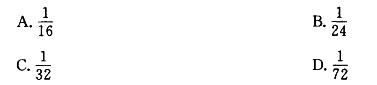
- A.见图A
- B.见图B
- C.见图C
- D.见图D
- 查看答案