For the past 3, 000 years, when pcople thought of money they thought of cash. From buying food to settling bar tabs, day-to-day dealings involved creased paper or clinking bits of metal.
Over the past decade,however ,digital payments have taken off-- tapping your plastic on a terminal or swiping a smartphone has become normal. Now this revolution is about to turn eash into an endangered specics in some rich cconomics. That will make the cconomy more efieicnt - -but it also poscs new problems that could hold the transition hostage.
Countries are eliminating ceash at varying speeds. But the direction of travel is clear, and in some cases the joumey is nearly complete. In Sweden the number of retail cash transactions per person has fallen by 80% in the past ten years. Cash accounts for just 6% of purchases by value in Norway. Britain is probably four or six years behind the Nordic countries. America is perhaps a deeade behind. Outside the rich world, cash is still king. But even there its dominance is being croded. In China digital payments rose from 4% of all payments in 2012 to 34% in 2017.
Cash is dying out beause of two forees. One is demand- younger consumers want payment systems that plug scamlessly into their digital lives. But equally important is that supplirs such as banks and tech firms (in developed markets) and telccoms companics (in emerging oncs) are developing fast, easy-to-use payment technologics from which they can pull data and pocket fees.
There is a high cost to running the infrastructure behind the cash economy-- ATMs, vans carrying notes, tellers who acept coins. Most financial firms are keen to abandonit, or deter old-fashioned customers with hefly fees.
In the main,the prospect of a cashless economy is excellent news. Cash is inefficient. In rich countries, minting, sorting, storing and distributing it is cstimated to cost about 0.5% of GDP. But that does not begin to capture the gains. When payments dematerialize, people and shops are less vulnerable to theft. Govermments can keep closer tabs on fraud or tax evasion.
Digitalisation vastly expands the playground of small businesses and sole traders by enabling them to sell beyond their borders. It also creates a credit history, helping consumers borrow.
Yet set against these benefts are a bundle of worries. Eleotronic payment systems may be vulnerable to technical failures power blackouts and cyber- atacks- this weck Capital One,an American bank, became the latest fim to be hacked. In a cashless economy the poor, the elderly and country folk may be left behind. And eradicating cash, an anonymous payment method, for a digital system could let govemments snoop on people's shopping habits and private titans exploit their personal data.
These problems have three remedies. First, govermments need to ensure that central banks' monopoly over coins and notes is not replaced by private monopolies over digital money. Rather than ltting a few credil-card firms have a stranglehold on the eleetronic pipes for digital payments, as America may yet allow; gov emments must ensure the payments plumbing is open to a range of digital firms which can build services on top of it. They should urge banks to offer cheap,instant,bank-to-bank digital transfers between deposit accounts ,as in Sweden and the Netherlands. Competition should keep priccs low so that the poor can afford most services, and it should also mean that if one firm stumbles others can step in,. making the system resilient. Sccond, govemments should maintain banks' obligation to keep customcr information private, so that the plumbing remains anonymous. Digital firms that use this plumbing to offer services should be free to monetise transaction data, through, for example, advertising, so long as their business model is made explicit to uscrs. Some customers will favour free services that track their purchases; others will want to pay to be left alonc.
Last, the phasc-out of cash should be gradual. For a period of ten years," banks should be obliged to accept and distribute cash in populated areas. This will buy govermments time to help the poor open bank accounts, educate the elderly and beef up internet access in rural areas. The rush towards digital money is the result of spontaneous demand and innovation. To pocket all the rewards, govemments need to prepare for the day when erumpled bank noles change hands for the last time.
According to Paragraph 2, which of the fllowing staterments is FALSE? ( )
- A.America has been left behind perthaps a decade comparing to Britain regarding the number of retail cash transaction
- B.The speeds of eliminating cash in several countries are different
- C.The dominance of cash is being croded even in the non-rich areas
- D.There is a rise of numbers of digital payments in China form 2012 to 2017
正确答案及解析
正确答案
解析
细节理解题。由第二段中“Britain is probably four or six years behind theNordic countries. America is perhaps a decade behind.”可知美国是相比于北欧国家或许落后了十年,不是比英国落后十年,所以答案选A.
包含此试题的试卷
你可能感兴趣的试题
根据《中华人民共和国中国人民银行法》的规定,我国货币政策的最终目标是( ),并以此促进经济增长。
-
- A.保持货币币值稳定
- B.实现充分就业
- C.保持物价稳定
- D.保持利率稳定
- 查看答案
箱子里面有红、白两种玻璃球,红球数比白球数的3倍多两个,每次从箱子里取出7个白球、15个红球。如果经过若干次以后,箱子里只剩下3个白球、53个红球,那么,箱子里原有红球比白球多多少个?
-
- A.102
- B.104
- C.106
- D.108
- 查看答案
市场经济体制下,财政具有的职能有( )。
-
- A.资源配置职能
- B.收入分配职能
- C.经济稳定和发展职能
- D.综合平衡职能
- E.货币发行职能
- 查看答案
以下对政府部门的储蓄,表述正确的是( )。
-
- A.政府部门的储蓄可以是正值,也可以是负值
- B.政府部门的储蓄包括私人储蓄和企业储蓄
- C.政府部门的储蓄一定是正值
- D.政府部门的储蓄一定是负值
- 查看答案
将自然数1~100分别写在完全相同的100张卡片上,然后打乱卡片,先后随机取出4张,问这4张先后取出的卡片上的数字呈增序的几率是多少?()
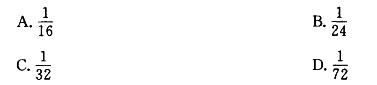
-
- A.见图A
- B.见图B
- C.见图C
- D.见图D
- 查看答案