Passage 3
For the first time in decades, some of the fundamental achievements and tenets of the EU are under threat. These include the single currency, open borders, free movement of labor and the notion that membership is forever.
Rather than rising to these challenges, the EU is creaking under the strain. Its 28 members are arguing bitterly and seem incapable of framing effective responses to their common problems.
These arguments are also taking place against an
ominous backdrop. Large parts of the EU remain sunk in a semi-depression with high unemployment and unsustainable public finances. The problems of an imploding Middle East are crowding in on Europe, in the form of hundreds of thousands of refugees. And the political fringes are on the rise---with the latest evidence being the election of a far-left Eurosceptic candidates to lead Britain`s Labor party.
With a sense of crisis mounting and the EU unable to respond, countries will be increasingly inclined
to act unilaterally or even---in the case of Britain--leave the bloc altogether.
The refugee crisis is already threatening cherished ideas about open borders. In the past couple of days, Germany has reimposed frontier controls with Austria---which, in turn, has imposed controls at its border with Hungary, which itself is working feverishly to complete a barbed-wire
fence to protect its frontier with non-EU Serbia. Controls have been tightened on the French-Italian borders, while migrants camp miserably in Calais, hoping to cross to England.
If the EU somehow gets a grip on the migrant crisis, these measures might be no more than temporary expedients. But if the pressure of would-be refugees heading for Europe remain intense, then temporary measures could harden into permanent controls.
Questions marks over open borders will easily shade into wider issues about access to welfare systems and labor markets. That is because EU countries are realizing that—in a border-free single market—a unilateral change of asylum rules
by Germany had implications for the immigration policies of all member states. Once migrants get citizenship in one EU country, they have the right to move to any other, to work there and to claim benefits. But if free movement of people and labor come into question, so does the EU`s single market—its central achievement.
The refugee issue has for the moment, overshadowed the euro. But the problems of the single currency have not gone away. On the contrary, Greece's decision this summer to knuckle
under and accept yet another austerity package has made the Eurozone look increasingly like a trap.
Even Greece, which is profoundly unhappy with life in the Eurozone, cannot risk leaving for fear of provoking a financial and economic crisis. Creditor countries such as Germany and the Netherlands are not much happier, as they fear they are being dragged into a system of permanent fiscal transfers towards the nations of Europe. Meanwhile, efforts to make the euro work better,
by pressing ahead with a banking union, are stuck in Brussels. This does not look like a sustainable situation and the risk of euro break-up will surely return.
The refugee and euro crisis bear on whether Britain will vote to stay in the EU, when it holds a referendum in 2016 or 2017. Until recently, the opinion polls looked promising for the pro-EU camp. But the migrant crisis plays directly into the most potent issue deployed by those campaigning for Britain to leave-which is that membership of
the EU means that the UK cannot control immigration. More broadly, the British are less likely to stay inside an organization that seems to be failing. If they vote to leave, the sense of crisis
within the EU would then mount--raising the possibility of further defections.
A partial unravelling and marginalization of the EU still looks more likely than a full-scale collapse. But even if an organization called the European Union continues to exist--- running buildings and paying salaries---it risks becoming increasingly irrelevant.
What is the best title for this passage?
- A.The impact of Refugee Crisis in EU
- B.The Crisis that Threaten to Unravel the EU
- C.UK, to Leave or to Stay
- D.EU Sees the Light at the End of the Tunnel
正确答案及解析
正确答案
解析
本文讲的是难民危机、希腊危机以及欧元危机弥漫欧洲,将威胁着欧盟,使其解散。其他几项文中都有提及,但不是全文主旨。故选B。
包含此试题的试卷
你可能感兴趣的试题
根据《中华人民共和国中国人民银行法》的规定,我国货币政策的最终目标是( ),并以此促进经济增长。
-
- A.保持货币币值稳定
- B.实现充分就业
- C.保持物价稳定
- D.保持利率稳定
- 查看答案
箱子里面有红、白两种玻璃球,红球数比白球数的3倍多两个,每次从箱子里取出7个白球、15个红球。如果经过若干次以后,箱子里只剩下3个白球、53个红球,那么,箱子里原有红球比白球多多少个?
-
- A.102
- B.104
- C.106
- D.108
- 查看答案
市场经济体制下,财政具有的职能有( )。
-
- A.资源配置职能
- B.收入分配职能
- C.经济稳定和发展职能
- D.综合平衡职能
- E.货币发行职能
- 查看答案
以下对政府部门的储蓄,表述正确的是( )。
-
- A.政府部门的储蓄可以是正值,也可以是负值
- B.政府部门的储蓄包括私人储蓄和企业储蓄
- C.政府部门的储蓄一定是正值
- D.政府部门的储蓄一定是负值
- 查看答案
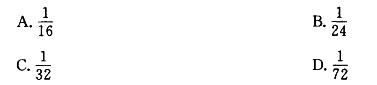
将自然数1~100分别写在完全相同的100张卡片上,然后打乱卡片,先后随机取出4张,问这4张先后取出的卡片上的数字呈增序的几率是多少?()
-
- A.见图A
- B.见图B
- C.见图C
- D.见图D
- 查看答案